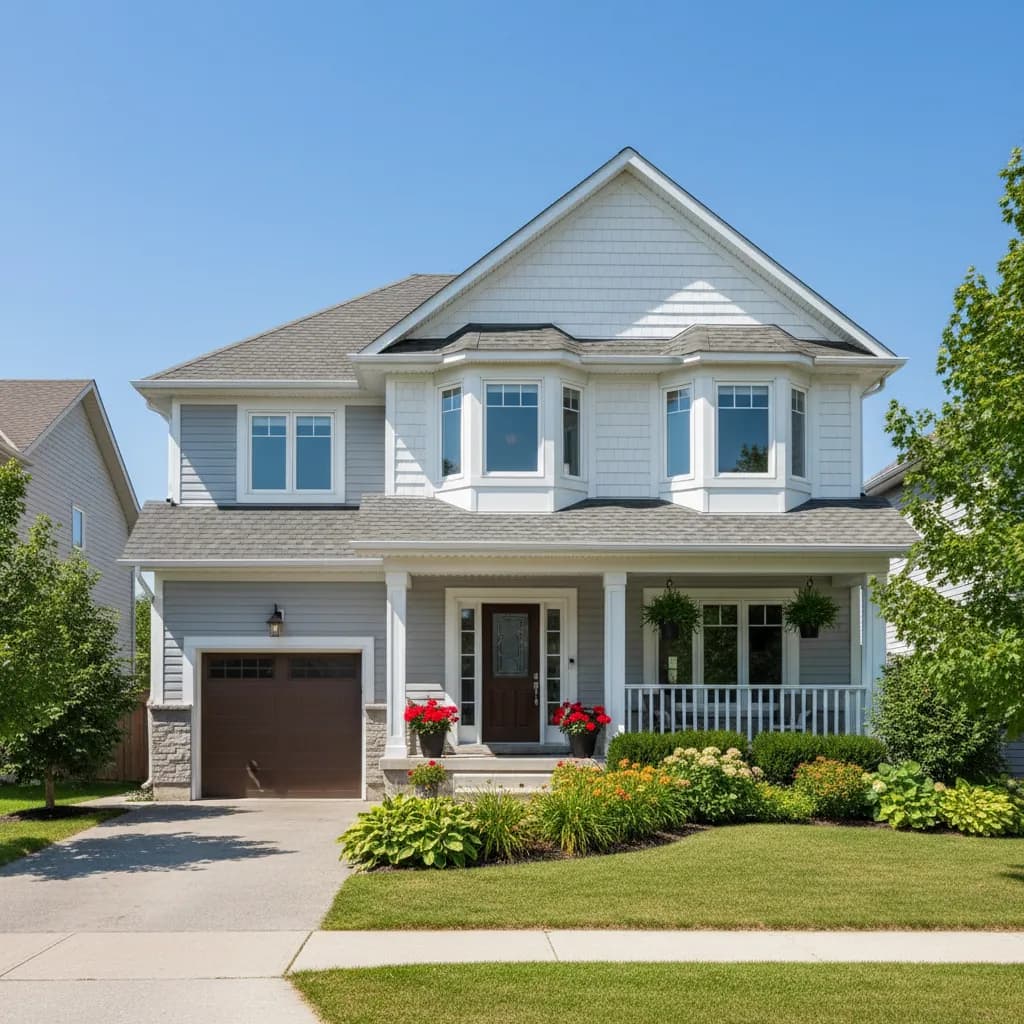
How Online Property Estimates Work — And What They Can't See
Discover how online property estimates are calculated, what data they use, and why they often miss the features that matter most to buyers in Canada's housing market.
AI-generated estimates for informational purposes only. Not a certified appraisal.
If you've ever typed your address into a property estimate tool, you probably noticed something unsettling: the number it gave you felt... incomplete. Maybe it seemed too low. Maybe it seemed too high. Either way, you couldn't quite figure out why it said what it said.
You're not imagining things. Online property estimates have a fundamental limitation that most homeowners never learn about until they try to sell.
Here's how they actually work — and what they're missing.
Where Online Estimates Come From
Most online property estimate tools use a combination of:
- Public records: Tax assessments, deed history, prior sale prices
- Geographic data: Neighbourhood averages, comparable sales in the area
- Basic property facts: Number of bedrooms, bathrooms, square footage (where available)
- Market trends: Local price movements, days on market, inventory levels
This is genuinely useful data. It forms the backbone of any responsible valuation. And for properties that are essentially average for their neighbourhood — well-maintained, typical layout, no unusual features — these estimates can be reasonably close.
The problem isn't the data. The problem is what the data can't capture.
What Online Estimates Can't See
When you drive through any Canadian neighbourhood, you immediately notice something the algorithms can't: not all homes are created equal. Two houses on the same street, with identical square footage and the same number of bedrooms, can have dramatically different market values based on features that never appear in public records.
Condition differences. One home might have a newly renovated kitchen with quartz countertops and hardwood floors throughout. The one next door might have original 1980s cabinets, linoleum in the bathroom, and carpet that's seen better days. The online estimate sees the same address, same tax records, same square footage. It has no way to know the difference.
Renovation quality. Even when public records show a renovation permit was pulled, they don't capture how the renovation was done. A professional contractor renovation and a DIY special can look completely different to a buyer — and to the price a buyer is willing to pay.
Layout and flow. Open-concept kitchens command premium interest in today's market. So do finished basements with legal secondary suites (where permitted). These features affect value significantly but rarely appear in standardized property data.
Location within the neighbourhood. Corner lots, backing onto a park, walk-out basements, south-facing backyards — these location nuances can add meaningful value that aggregate neighbourhood data smooths over.
Updates and maintenance history. New windows, a re-shingled roof in the last five years, a modern HVAC system — these are signs of a well-maintained home that buyers and appraisers notice, but databases don't track.
Here's the key insight: the features that differentiate your home from the neighbours are almost entirely invisible to online estimate algorithms.
Why This Matters for Canadian Homeowners
Canada's housing market is complex. In hot markets like the Greater Toronto Area, Vancouver, and Calgary, homes in the same neighbourhood can trade at significantly different price points based on condition and features. The difference between a move-in ready home and one that needs work can represent tens of thousands of dollars.
If you're relying solely on an online estimate to understand your home's value, you're working with an incomplete picture.
This doesn't mean online estimates are useless. They provide a reasonable baseline — a starting point for understanding where your property might sit in the market. But treating them as definitive truth can lead to:
- Overpricing based on neighbourhood averages when your specific property warrants more (or less)
- Underpricing by assuming you're worth less than you actually are, leaving money on the table
- Misaligned expectations when you list and the offers don't match what the tool suggested
The goal isn't to replace market data with guesswork. It's to combine market data with actual property-specific information to get a more complete picture.
How Photo-Based Analysis Changes the Equation
This is where advances in AI technology are starting to shift what's possible.
When you upload property photos to a valuation tool that uses AI photo analysis, the system can assess:
- Materials and finishes detected in images — flooring types, countertop quality, cabinet condition
- Overall condition scoring based on visible wear, updates, and maintenance
- Renovation quality indicators — modern updates vs. dated but functional vs. original
- Design assessment — contemporary, transitional, or dated appearance
This doesn't replace the value of comparable sales data and market trends. It adds a layer of property-specific information that traditional tools simply don't have access to.
The result is an estimate that accounts for both where you are (market data) and what you have (actual property condition).
What This Means for You
If you're a Canadian homeowner trying to understand what your property might be worth:
- Use online estimates as a starting point, not a final answer. Look at the range, not the specific number.
- Consider the gap between public data and your property. If you've renovated, maintained, or updated, your home may be worth more than the estimate suggests. If deferred maintenance is on your to-do list, that factors in too.
- Look for tools that incorporate property-specific data. AI photo analysis is increasingly available and can help bridge the gap between aggregate market data and your specific property.
- Remember: value is ultimately determined by buyers. Market data tells you what's happened in the past. Condition and features tell you how your property compares to others buyers are considering today.
The Bottom Line
Online property estimates are useful tools — but they're inherently limited by the data they can access. They know facts about your address, but they don't know the difference between your updated kitchen and your neighbour's original one.
Understanding these limitations doesn't mean throwing out the data. It means using it wisely, with awareness of what it can and cannot tell you.
As Canadian homeowners, we're fortunate to have more information available than ever before. The key is knowing how to combine that information with a realistic assessment of your specific property.
This is an AI-generated estimate based on available market data and is not a certified appraisal. Always consult a licensed real estate professional before making financial decisions.
Related Articles
- AI in Real Estate — How AI is changing property valuation
- How to Price a Home in Canada — Pricing methods that combine data with property insights
Ready to see what buyers actually see? Get a property insight estimate that combines market data with AI photo analysis.
Back up your pricing recommendation with data.
Generate a professional, client-ready report in 3 minutes — AI photo analysis, comps, and condition assessment included.
Generate a Report