How to Price Your Home for Sale in Canada (2026 Guide)
Complete guide to pricing your home for sale in Canada. Learn about comps, condition assessment, market trends, and pricing strategy.
How to Price Your Home for Sale in Canada (2026 Guide)
Pricing your home correctly is one of the most important decisions you'll make as a seller. Set the price too high, and you'll get fewer showings and your home may linger on the market. Price it too low, and you're leaving money on the table. So how do you find the sweet spot?
This guide walks you through the key factors realtors and data analysts use to determine a fair listing price in Canada.
1. Understanding the Comparable Sales (Comps) Method
The most reliable way to price your home is by comparing it to similar homes that have recently sold in your area. These "comparable properties" or "comps" form the foundation of most pricing strategies.
What Makes a Good Comp?
A solid comp should have:
- Same neighborhood (ideally within 1km, but closer is better)
- Similar size (within 10-20% of your home's square footage)
- Similar age and condition (built within 10-20 years, similar renovation status)
- Same property type (detached house, condo, townhouse, etc.)
- Recent sale (sold within the last 3-6 months)
Finding Comps
You can search for recent sales through:
- MLS listings (ask your realtor, usually the most accurate)
- Real estate websites (Zolo, HouseSigma, Wahi, and other listing platforms)
- Property assessment records (publicly available online)
- Your realtor's market data (they have access to local MLS databases)
Pro Tip: Your realtor should provide you with a market analysis that shows 5-10 comps. If they don't, ask for it.
2. Condition Assessment: The Hidden Price Driver
Two homes in the same neighborhood can sell for very different prices based on condition. Realtors and appraisers use a standardized condition grading system (C1-C6) to evaluate properties.
Here's how it works:
| Grade | Condition | Description |
|-------|-----------|-------------|
| C1 | Excellent | New or recently fully renovated |
| C2 | Very Good | Well-maintained, recent updates |
| C3 | Good | Adequately maintained, minor wear |
| C4 | Fair | Deferred maintenance, cosmetic issues |
| C5 | Poor | Significant deferred maintenance |
| C6 | Very Poor | Major structural/system issues |
Your home's condition grade directly impacts its value relative to comps. If comparable homes are all C2 and your home is C4, you should expect to price at the lower end of the comp range to account for the difference.
Self-Assess Your Home's Condition
Walk through your home and honestly evaluate:
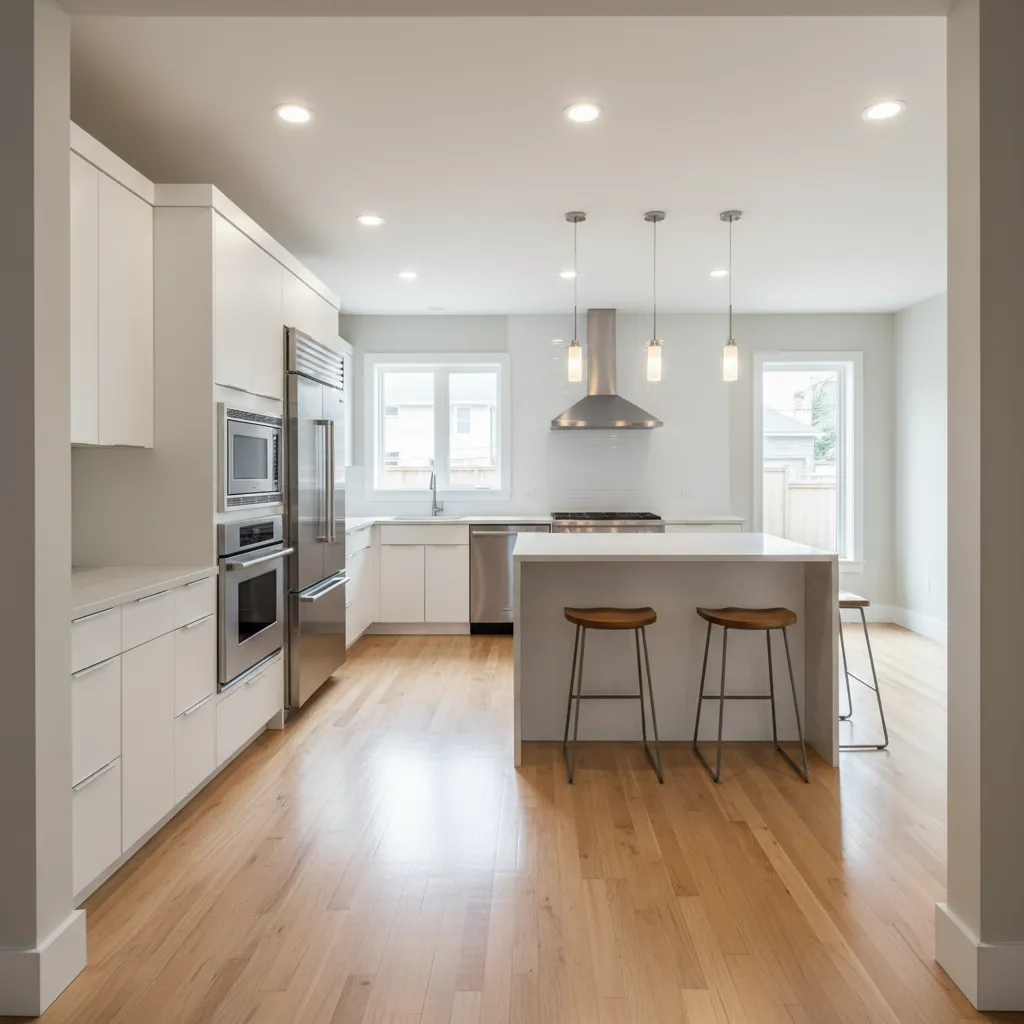
- Kitchen: Updated appliances and countertops? Dated cabinets or layout?
- Bathrooms: Modern fixtures and finishes? Worn tiles or old vanity?
- Flooring: Hardwood, tile, or carpet? Refinished or worn?
- Walls & Paint: Fresh paint? Scuffed walls or damage?
- Systems: HVAC, roof, plumbing — how old? Working well?
- Windows & Doors: New, well-maintained, or drafty?
- Overall Cleanliness: Move-in ready or needs cleanup?
3. The Price Per Square Foot Calculation
Once you have 3-5 good comps, calculate their price per square foot:
Price per sqft = Recent Sale Price ÷ Square Footage
Example:
- Comp 1: $450,000 ÷ 1,800 sqft = $250/sqft
- Comp 2: $480,000 ÷ 1,900 sqft = $253/sqft
- Comp 3: $520,000 ÷ 2,000 sqft = $260/sqft
Average comp price: $254/sqft
If your home is 1,850 sqft:
1,850 × $254 = $469,900 (estimated value range)
This gives you a ballpark figure, but don't use this number alone—adjust for condition, updates, and lot factors.
4. Market Trends: Is the Market Heating Up or Cooling?
Your local real estate market matters. Is inventory rising or falling? Are homes selling quickly or sitting longer?
Key Market Indicators:
- Days on market (DOM): How many days until homes sell? Lower is stronger.
- Sale-to-list ratio: Are homes selling at, above, or below asking? Strong markets see 95%+ ratios.
- Inventory level: How many homes are for sale? Low inventory = stronger seller market.
- Price trends: Are prices trending up or down over the last 3-6 months?
If homes in your area are selling in 30 days at 100% of asking price, the market is strong—you can price more confidently. If homes are selling in 90+ days at 90% of asking, you'll need to price more competitively.
5. Your Home's Unique Features
No two homes are identical. Adjust your comp-based estimate for:
Upgrades That May Add Value
- Kitchen renovation (industry benchmarks suggest significant buyer appeal)
- Bathroom updates (high-impact, especially primary bath)
- Hardwood floors (preferred over carpet in many markets)
- Updated HVAC/roof (systems less than 10 years old)
- Finished basement (adds functional square footage)
- Outdoor space (large deck, patio, landscaping)
- Natural light (corner lots, large windows)
Features That May Reduce Value
- Dated finishes (outdated kitchen, avocado fixtures)
- Deferred maintenance (needs roof, HVAC, foundation repair)
- Poor curb appeal (overgrown landscaping, worn exterior)
- Structural issues (foundation cracks, roof leaks—get inspector's report)
- Undesirable location features (busy street, poor view, basement window)
- Odors (pet, smoke, mildew)
6. The Pricing Decision: List Price vs. Realistic Price
You now have three data points:
- Comp-based estimate (price per sqft analysis)
- Market conditions (is the market favoring buyers or sellers?)
- Your home's condition (how does it compare to recent sales?)
This should give you a realistic price range.
Common Pricing Mistakes
❌ Overpricing based on emotion. "I renovated this kitchen and spent $50K, so it should be worth more." (Not necessarily—kitchens don't always return their full cost in resale value.)
❌ Overpricing because "that's what it's worth to me." The market decides. If 5 comps sold for $450K and yours is similar, pricing at $480K will likely result in zero offers.
❌ Underpricing to sell fast. While moving quickly can be appealing, you're losing real money. A realtor can help you price right and still sell within 30-45 days in most markets.
The Sweet Spot
Research shows homes priced within 5% of market value tend to sell fastest and closest to asking price. Your realtor can provide a Comparative Market Analysis (CMA) that shows the right range.
7. Getting a Professional Valuation
If you want a more detailed estimate than comps alone, consider:
Licensed Appraisal (~$300-500)
- Most accurate, required for mortgages
- Based on standardized methods
- Includes detailed condition assessment
- Takes 1-2 weeks
AI-Powered Valuation (instant, free)
- Uses photos, property data, comps, market trends
- Instant results, helpful for initial assessment
- Not a substitute for appraisal, but good starting point
- Can help you understand your home's strengths and weaknesses
CMA from Your Realtor (free with listing)
- Uses their market knowledge and MLS data
- Personalized recommendations
- Based on their local experience
8. Final Pricing Tips
✅ Price right from the start. Overpriced listings that get reduced often sell for less than if they'd been correctly priced initially.
✅ Be ready to adjust. If you're not getting showings after 2 weeks, your price may be too high. Your realtor should help you adjust.
✅ Factor in your timeline. If you need to sell in 30 days, price more aggressively. If you can wait 6 months, you can be more selective.
✅ Consider the market season. Spring and summer typically see more active markets. Winter pricing may need to be more competitive.
✅ Get a home inspection first. Knowing your home's condition (and any issues) helps you price confidently and handle offers better.
Take the Next Step
Pricing is both art and science. Use comps, assess your condition honestly, and leverage your realtor's market knowledge. If you want a quick sense of your home's potential value range, try our free home valuation tool—upload a few photos and get an instant AI-powered estimate to guide your pricing conversation.
Disclaimer: This is general information for educational purposes only. Actual property values depend on many factors that may not be captured here. Factors like specific property characteristics, market conditions, economic factors, and local regulations can significantly affect value. For specific valuation advice, consult a licensed appraiser or real estate professional before making listing decisions. Hausprice provides AI-generated estimates that are not certified appraisals and should not be relied upon for legal, financial, or transactional decisions.
Back up your pricing recommendation with data.
Generate a professional, client-ready report in 3 minutes — AI photo analysis, comps, and condition assessment included.
Generate a Report