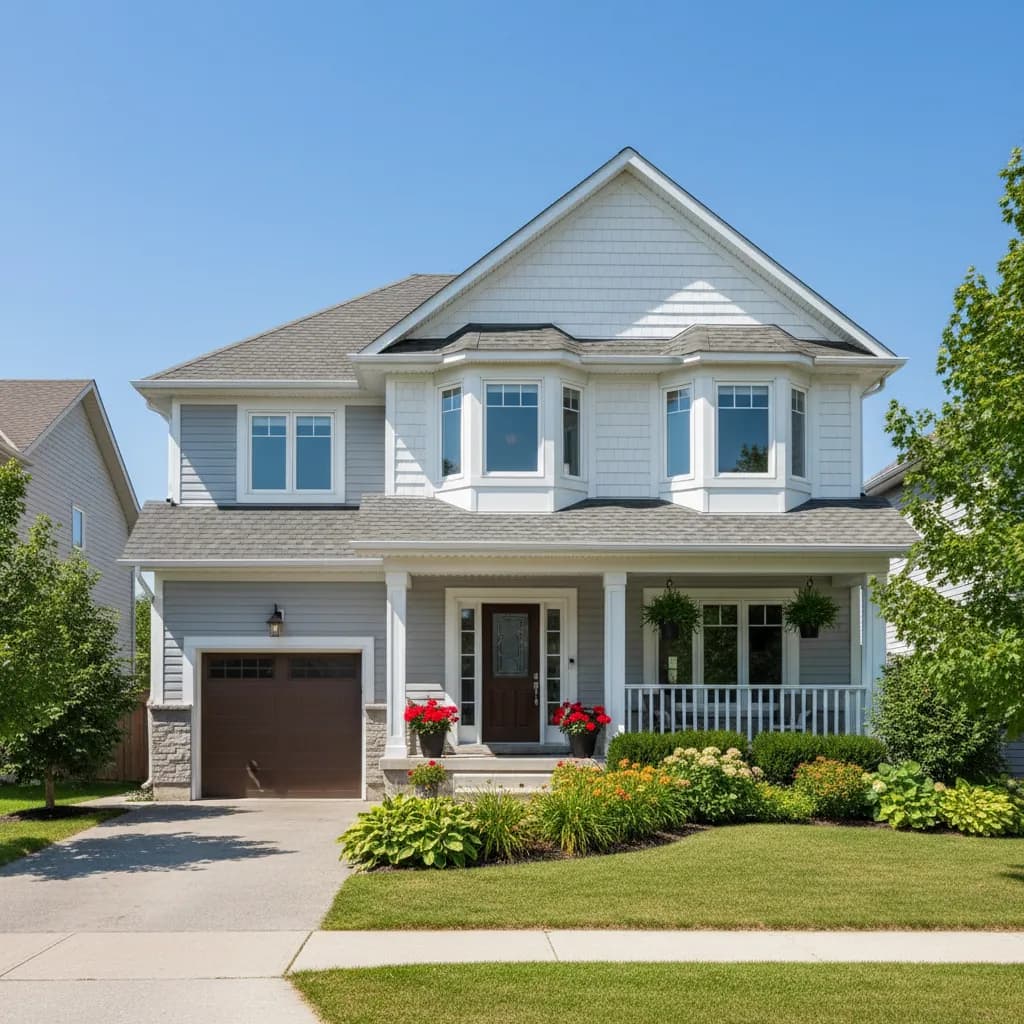
"How Curb Appeal Affects Home Sale Price Ranges"
Explore how curb appeal and first impressions impact home sale prices. Research-backed insights on exterior improvements and buyer perception.
How Curb Appeal Affects Home Sale Price Ranges
You've heard it a thousand times: "Curb appeal matters." But how much does it actually matter? Can landscaping really move your home sale price up by $10,000? $30,000?
The answer is more nuanced than realtor clichés suggest. This article breaks down what research actually shows about curb appeal, exterior improvements, and buyer perception.
1. What Is Curb Appeal? And Why Does It Matter?
Definition: Curb Appeal
The immediate visual impression a buyer gets when they first see your home from the street. It includes:
- Landscaping (front lawn, shrubs, flowers, trees)
- Exterior condition (siding, roof, paint)
- Entryway (front door, porch, walkway)
- Driveway (condition, appearance)
- Garage appearance
- Overall cleanliness and maintenance
- Lighting (especially at night)
Why It Matters
Buyers form first impressions quickly—often within 10 seconds of seeing a home. That first impression colors their entire perception of the property. A beautiful exterior makes buyers want to see inside. A neglected exterior makes them skip to the next listing.
Research fact: Homes with excellent curb appeal receive 5-10% more showings than identical homes with poor curb appeal.
2. The Psychology of First Impressions
The Anchoring Effect
A buyer's first impression anchors their entire evaluation.
Example:
- Home A: Beautiful landscaping, fresh paint, new door → Buyer thinks "This is well-maintained"
- Home B: Same interior quality, but overgrown yard, dated exterior → Buyer thinks "This needs work"
Even if the interiors are identical, the buyer's mindset is completely different walking in.
The Negativity Bias
Buyers notice problems more than they notice quality.
Example: A buyer will forgive dated cabinets inside if the exterior is immaculate (suggests the homeowner cares). But a buyer won't forgive dated cabinets if the exterior is neglected (suggests the homeowner doesn't care).
Time Investment
Buyers who love the exterior invest more time in viewing the interior. Buyers skeptical about the exterior rush through.
Research: Homes with excellent curb appeal have longer average showing times (suggesting buyers are taking more time to evaluate interior).
3. What Curb Appeal Actually Affects (The Data)
✅ What Curb Appeal DOES Affect:
- Number of showings (excellent vs. poor curb appeal = 5-10% more showings)
- Time spent in home (beautiful exterior = longer viewings)
- Buyer emotional response (feel "excited" vs. "skeptical")
- Offer competition (good curb appeal attracts multiple offers)
- Negotiation power (strong curb appeal = less price haggling)
❌ What Curb Appeal DOESN'T Directly Affect:
- Actual home value (curb appeal doesn't change square footage, bed count, condition inside)
- Appraisal (appraisers value structure/systems, not landscaping)
- Price per square foot (determined by interior condition and market)
The Real Impact
Curb appeal doesn't increase the true market value of a home. Rather, it increases how many qualified buyers see it and how serious they are about it.
Translation: Good curb appeal reduces days on market and attracts better offers. Poor curb appeal extends selling time and weakens buyer interest.
4. Curb Appeal Impact By Price Point
Under $350,000 Homes
- High impact: Curb appeal very important
- Why: Buyer pool is price-sensitive and has lots of options
- Implication: Poor curb appeal = fewer showings = longer sale
- ROI on improvements: Good (paint, landscaping show quick returns)
$350,000-$550,000 Homes
- Moderate-high impact: Curb appeal matters, but less than price/interior condition
- Why: Mixed buyer pool (some price-sensitive, some quality-focused)
- Implication: Good curb appeal helps, but it's one factor among many
- ROI on improvements: Moderate (helps, but not magic)
Over $550,000 Homes
- Moderate impact: Curb appeal expected but less determinative
- Why: Buyers focused more on interior quality, systems, uniqueness
- Implication: Neglected curb appeal is a red flag, but excellent curb appeal doesn't command premium pricing
- ROI on improvements: Lower (high-end buyers focus on interior quality)
5. High-Impact Curb Appeal Improvements (And Their ROI)
Tier 1: Highest ROI ($500-$2,000 investment)
Professional Landscaping Refresh
- Power wash driveway/patio
- Mulch flower beds
- Trim overgrown shrubs
- Plant colorful flowers (seasonal)
- Invest: $500-$1,500
- Impact: Transforms neglected property to "cared for"
- ROI: High (often 100%+, you get back most/all of it)
- Industry research: Landscaping improvements typically associated with positive buyer perception
Fresh Paint (Exterior)
- Paint front door (if dated)
- Paint trim if needed
- Invest: $300-$1,000
- Impact: Updates the look, signals maintenance
- ROI: High (100%+ return common)
- Industry research: Fresh paint associated with faster sales and better offers
Lighting Upgrades
- New outdoor fixtures (porch, pathway)
- Solar lights on walkway
- Invest: $200-$800
- Impact: Improves nighttime appearance, increases safety perception
- ROI: High (lighting improvements often noted favorably)
Driveway/Walkway Cleaning
- Pressure washing
- Filling minor cracks
- Invest: $200-$500
- Impact: Cleanliness signals care
- ROI: Very high (often 150%+ return)
Tier 2: Moderate ROI ($1,500-$5,000 investment)
New Front Door
- Replace dated/worn door
- Install quality hardware
- Invest: $1,000-$3,000
- Impact: Major visual change, first thing buyers see
- ROI: Moderate (typically 50-75% return on investment)
- Industry research: Front door replacement consistently improves buyer perception
Landscaping Upgrade
- New shrubs/plantings
- Sod/seed lawn
- Remove dead trees
- Invest: $2,000-$5,000
- Impact: Substantial visual improvement
- ROI: Moderate (50-75% return typical)
- Research: Landscaping improvements associated with faster sales, not higher prices
Roof Cleaning/Repair
- Clean moss/algae
- Minor repairs
- Replace obvious damaged shingles
- Invest: $500-$2,000
- Impact: Prevents "needs roof" concerns
- ROI: Moderate-high (good return as it removes concerns)
Tier 3: Lower ROI ($5,000+ investment)
Major Roof Replacement
- Full new roof
- Invest: $5,000-$15,000
- Impact: Major improvement, removes "roof concern" from inspection
- ROI: Lower (typically 30-50% return, but prevents big problems)
- Key: This is a "must-do" if roof is actually failing, but not a "upgrade for ROI" improvement
Siding Replacement
- New siding
- Invest: $8,000-$20,000
- Impact: Completely transforms exterior
- ROI: Lower (typically 30-50% return)
- Key: Only do if existing siding is truly deteriorated
Deck Renovation
- New deck or major repair
- Invest: $5,000-$20,000
- Impact: Adds functional outdoor space
- ROI: Mixed (depends on deck size, existing deck quality, local market)
6. Research: What Actually Gets Buyers to Notice?
Studies on Buyer Perception
Real estate research shows:
- Overgrown landscaping is the #1 negative curb appeal factor
- Buyers interpret overgrowth as "doesn't care about maintenance"
- Fixing overgrowth = immediate credibility boost
- Cleanliness matters disproportionately
- A clean, modest exterior outperforms an expensive but dirty exterior
- Power washing driveway/patio = quick high-ROI improvement
- Paint condition signals maintenance
- Peeling or faded paint = red flag ("How's the inside if the outside looks like this?")
- Fresh paint = positive signal ("This owner maintains the property")
- Lawn condition = indicator of care
- Dead patches, weeds, dandelions = neglect
- Green lawn, clean edges = maintenance
- First impression lasts
- Buyers form opinion in first 30 seconds
- Subsequent viewing doesn't change first impression much
- This is why curb appeal is important—it's the gate
7. Curb Appeal Mistakes (What NOT to Do)
❌ Mistake #1: Extreme Personalization in Landscaping
- Your beautiful Japanese rock garden might not appeal to every buyer
- Stick to classic: green lawn, simple plantings, neutral colors
- Buy plants that are hardy and low-maintenance (perennials vs. annuals)
❌ Mistake #2: Neglecting Cleanliness for Design
- A neglected front yard with "nice" plantings still looks bad
- Focus on cleanliness first: mow, power wash, edge
- Planting comes second
❌ Mistake #3: Over-Investing in Curb Appeal
- Spending $10,000 on landscaping for a $350,000 home doesn't add $10,000 in value
- Focus on high-ROI improvements: paint, landscaping refresh, cleanliness
- Avoid major structural changes (new driveway, siding) just for appearance
❌ Mistake #4: Doing Expensive Improvements But Neglecting Basic Maintenance
- New door with broken gutter = still looks unmaintained
- Fix broken items first, add upgrades second
❌ Mistake #5: Seasonal Timing Mistakes
- List in winter without addressing snow/ice appearance
- Plant flowers that bloom after peak buying season
- Time your improvements to coincide with peak selling season (spring/summer)
8. The Curb Appeal-to-Interior Connection
The Halo Effect
Good curb appeal creates a "halo effect" for the interior.
Scenario A: Beautiful exterior → Buyer walks in with high expectations → Interior looks good → "Great home!"
Scenario B: Neglected exterior → Buyer walks in with skepticism → Same interior → "Not what I expected, honestly."
The interior can be identical, but buyer perception differs because of the exterior first impression.
The Inverse
Poor curb appeal requires even better interior to overcome first impression.
To sell a home with poor curb appeal, the interior must be exceptional. This puts you at a disadvantage.
Better to improve curb appeal than to depend on exceptional interior to overcome it.
9. Timing Curb Appeal Work
Best Time: 3-6 Months Before Listing
- Allow time to plan and execute improvements
- Gardens have time to mature/grow
- Seasonal plantings bloom at right time
Good Time: 4-8 Weeks Before Listing
- Still time for paint, landscaping refresh, cleaning
- Seasonal plantings still work (unless winter)
- Professional improvements look fresh at listing
Last-Minute: 1-2 Weeks Before
- Power wash, mulch, cut grass, plant annual flowers
- Paint touch-ups
- It's better than nothing, but less ideal
Never: During Listing
- Avoid major construction/landscaping during showings
- Buyers don't want to see disruption
- Complete work before you list
10. The Bottom Line on Curb Appeal
What It Actually Does:
- ✅ Attracts more showings
- ✅ Removes negative first impression
- ✅ Makes buyers want to see interior
- ✅ Helps with negotiations
- ✅ Speeds up sale
What It Doesn't Do:
- ❌ Increase actual home value
- ❌ Change appraisal value
- ❌ Overcome major interior problems
- ❌ Change price per square foot
- ❌ Create investment return
When to Invest in Curb Appeal:
- Your home is in good condition inside → curb appeal helps close the deal
- You're in competitive market → curb appeal differentiates you
- Your price point is under $400K → curb appeal very important
- Your exterior is neglected → fix it (it's a red flag)
When to Skip Expensive Improvements:
- Your exterior is already decent → minor touch-ups sufficient
- Major interior issues need fixing first → curb appeal won't matter
- Your price point is very high → buyers focus on interior quality
- You're in soft market → focus on pricing, not staging
Your Curb Appeal Action Plan
- Evaluate honestly: Walk to the street, look at your home. What's your first impression?
- Prioritize:
- Fix obvious problems (broken fixtures, peeling paint, overgrowth)
- Then add appeal (new plants, lighting, paint refresh)
- Budget smart:
- Tier 1 improvements first ($500-$2K, high ROI)
- Tier 2 if budget allows ($1.5K-$5K, moderate ROI)
- Skip Tier 3 unless necessary (major structural work)
- Time it right:
- Plan 3-6 months before listing if possible
- Execute 4-8 weeks before listing at minimum
- Don't over-invest:
- Curb appeal is important, but it's not magic
- Good interior is more important than great exterior
- Price right, market well, make the home look cared-for
Disclaimer: This article discusses general research on curb appeal and buyer perception. Actual impact varies by market, property type, neighborhood, and buyer demographics. While research suggests curb appeal affects buyer interest and speed of sale, it does not guarantee higher sale prices or specific financial returns. For customized advice on improvements for your specific property, consult with a local real estate agent who knows your market.
Back up your pricing recommendation with data.
Generate a professional, client-ready report in 3 minutes — AI photo analysis, comps, and condition assessment included.
Generate a Report